Wednesday, March 15, 2006

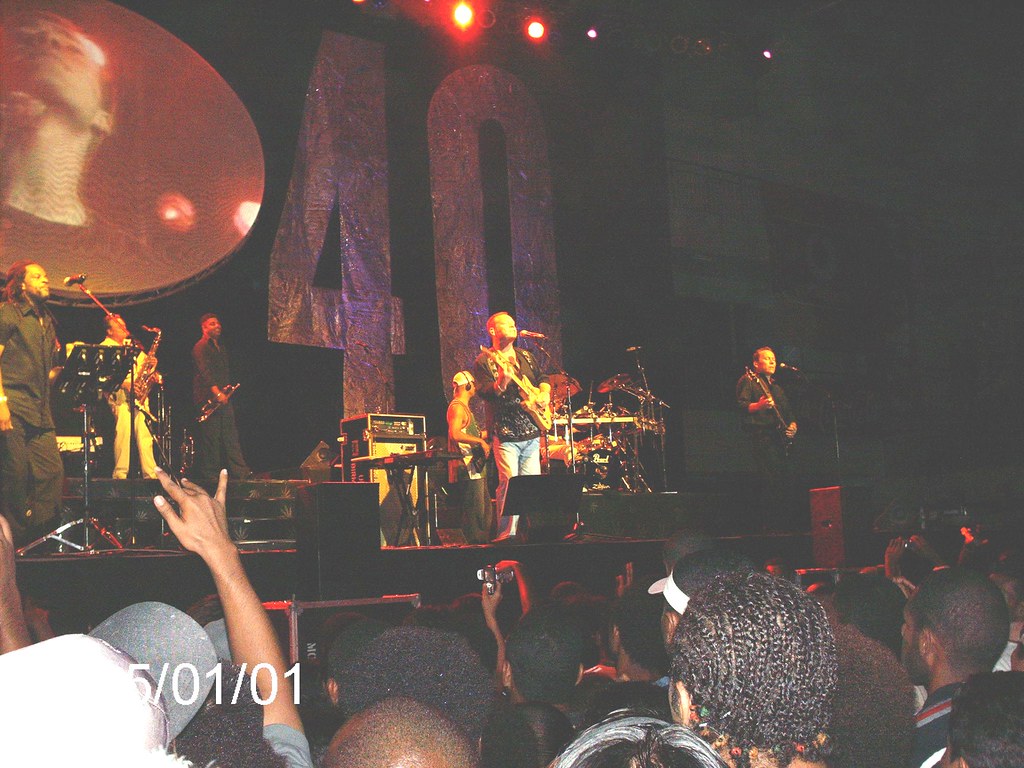
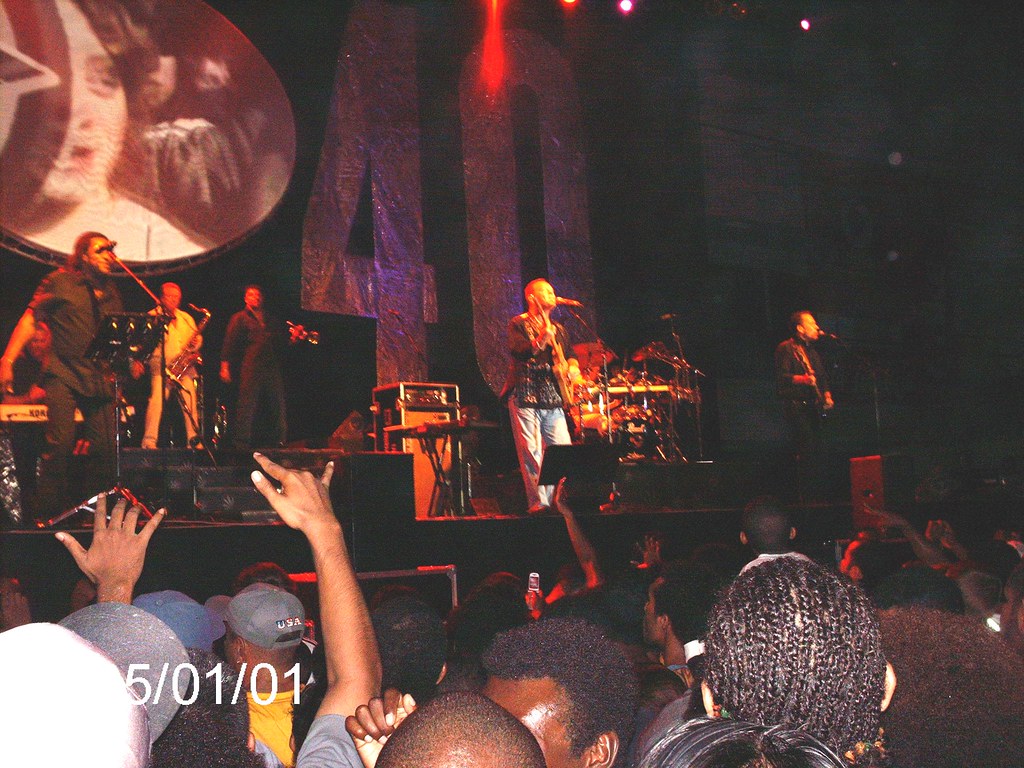
UB40 Rocks Suva - Fiji

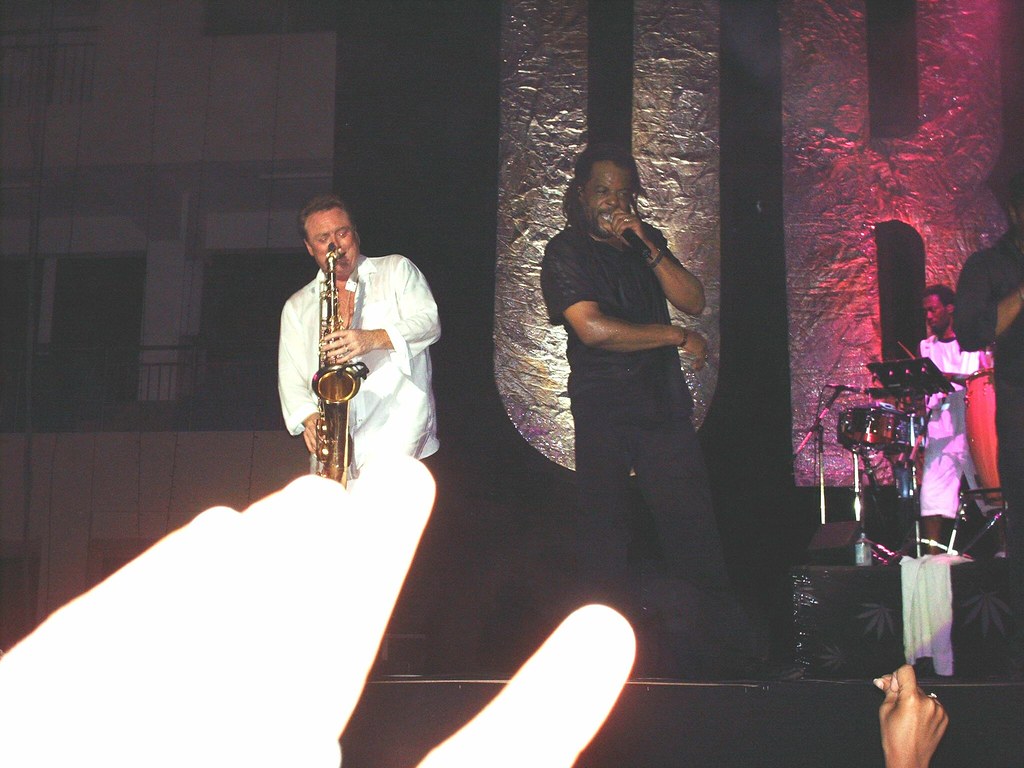
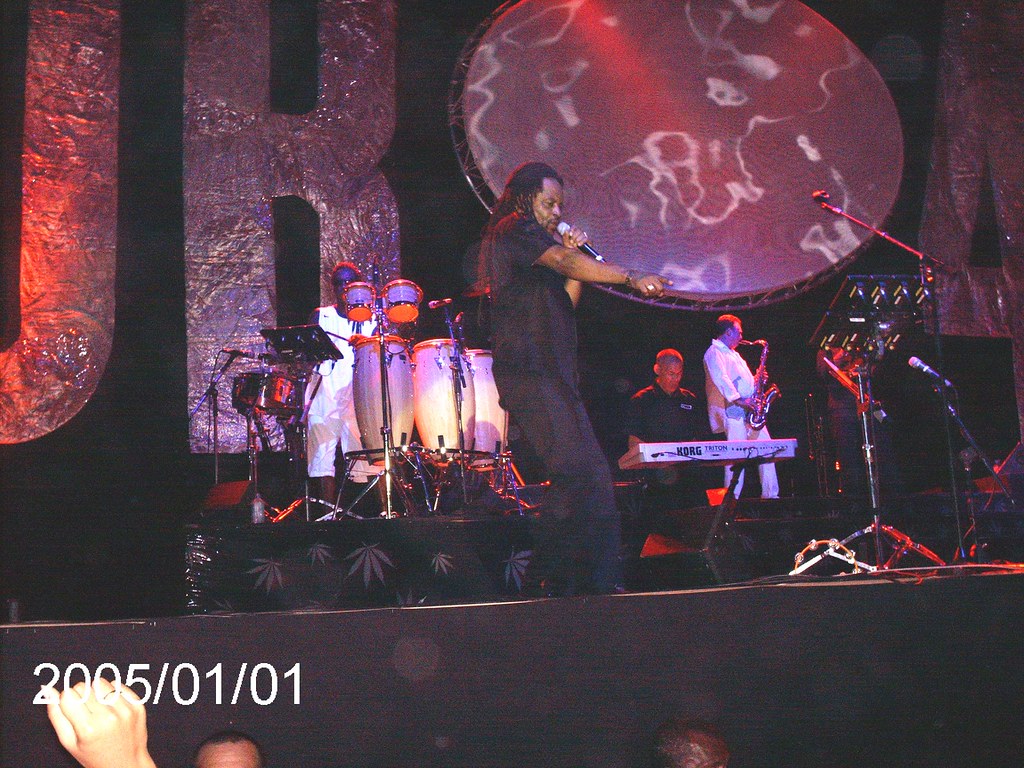
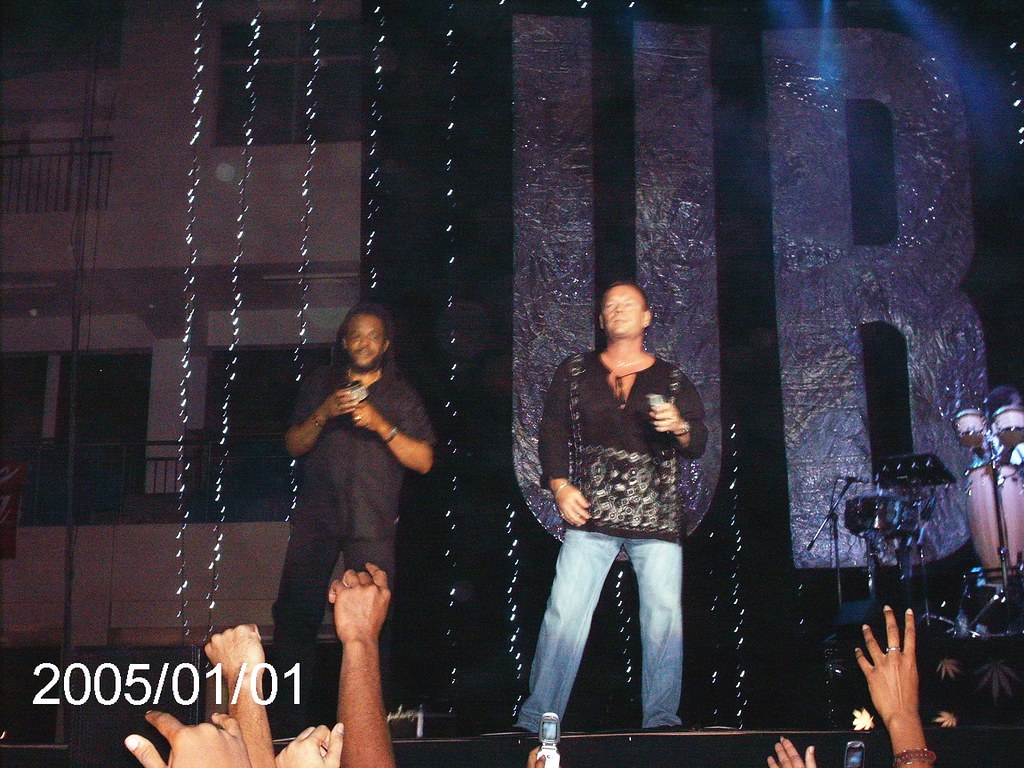
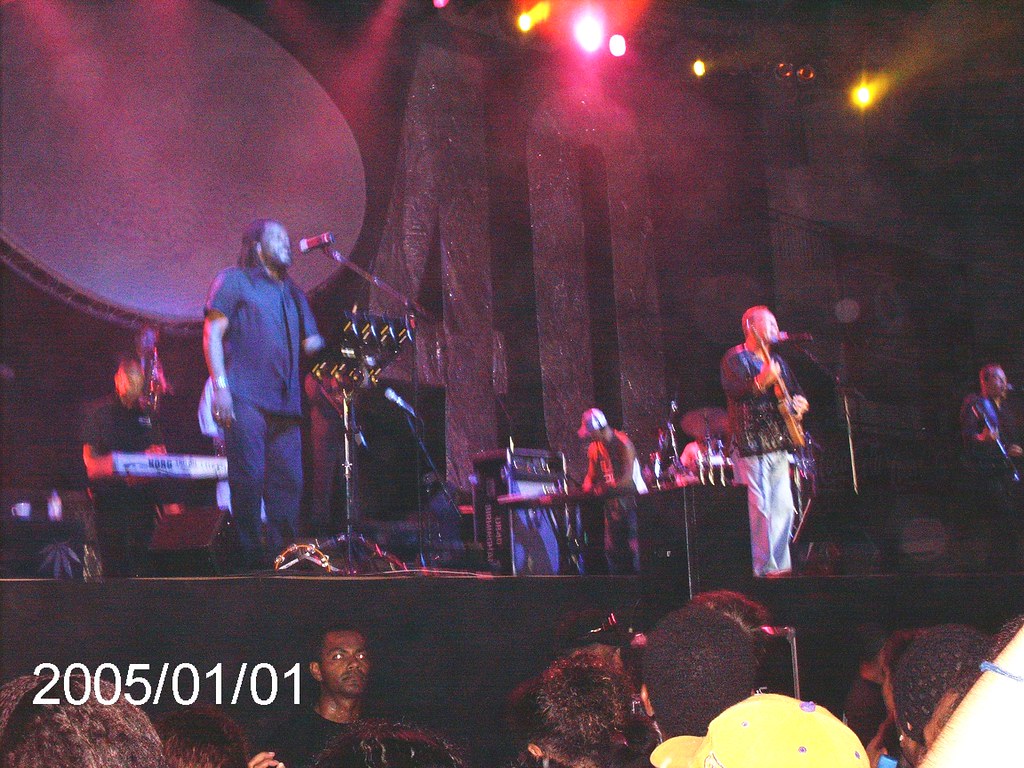
Here are some images taken during the UB40 "Who You Fighting For" World Tour to Fiji, at the FMF Dome on the 10th of March 2006. There was a capacity crowd of about 7000 fans, that includes students from Solomon Islands studying at USP. The band did two shows. Click Photos to Enlarge


Monday, March 06, 2006

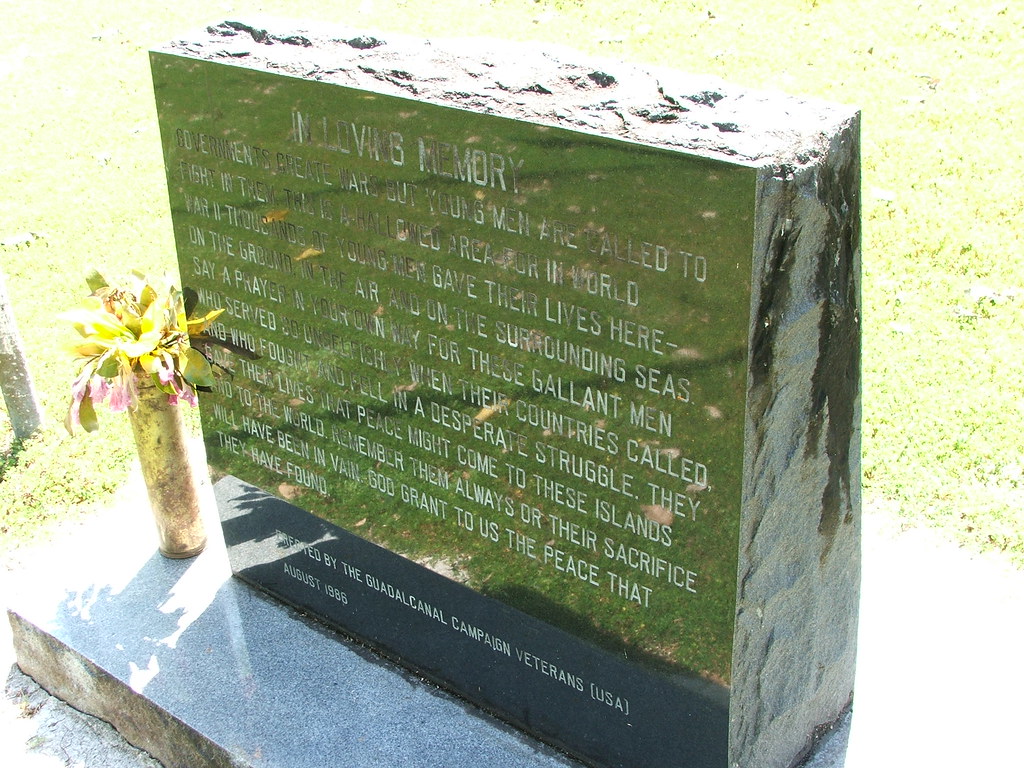
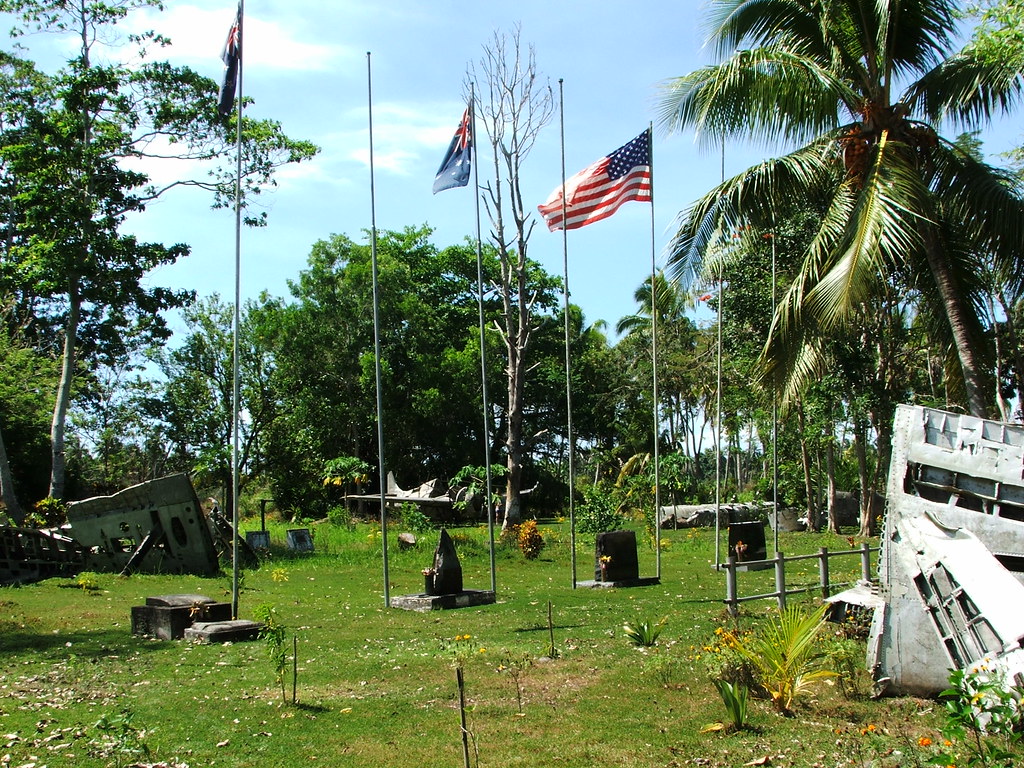
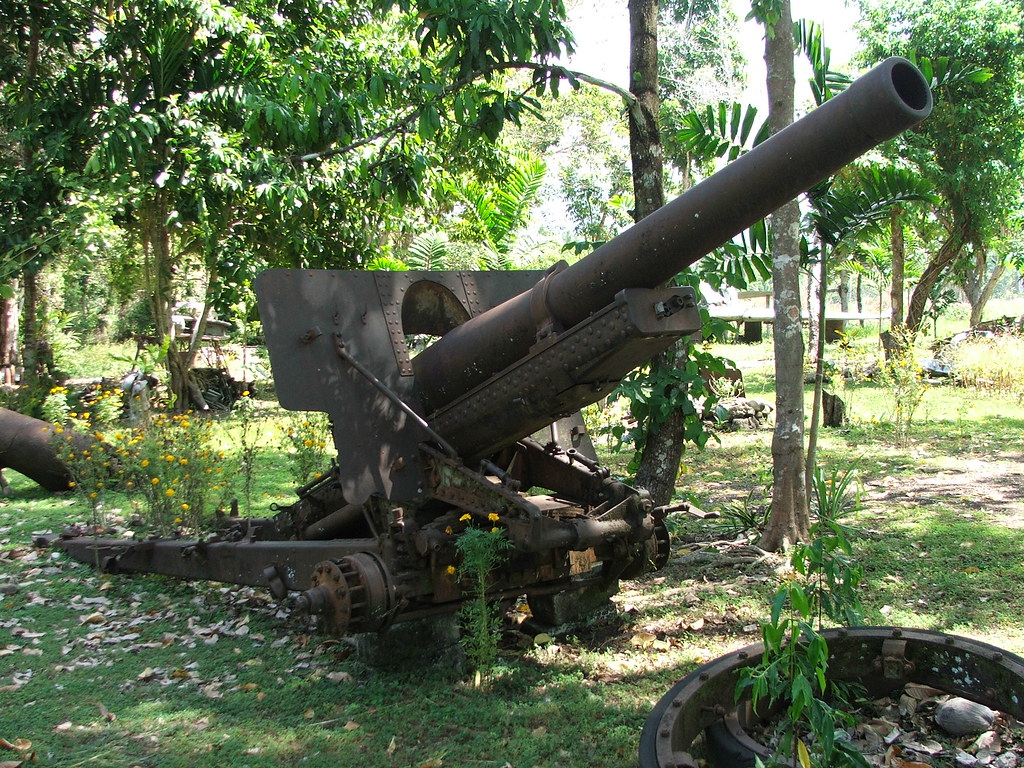
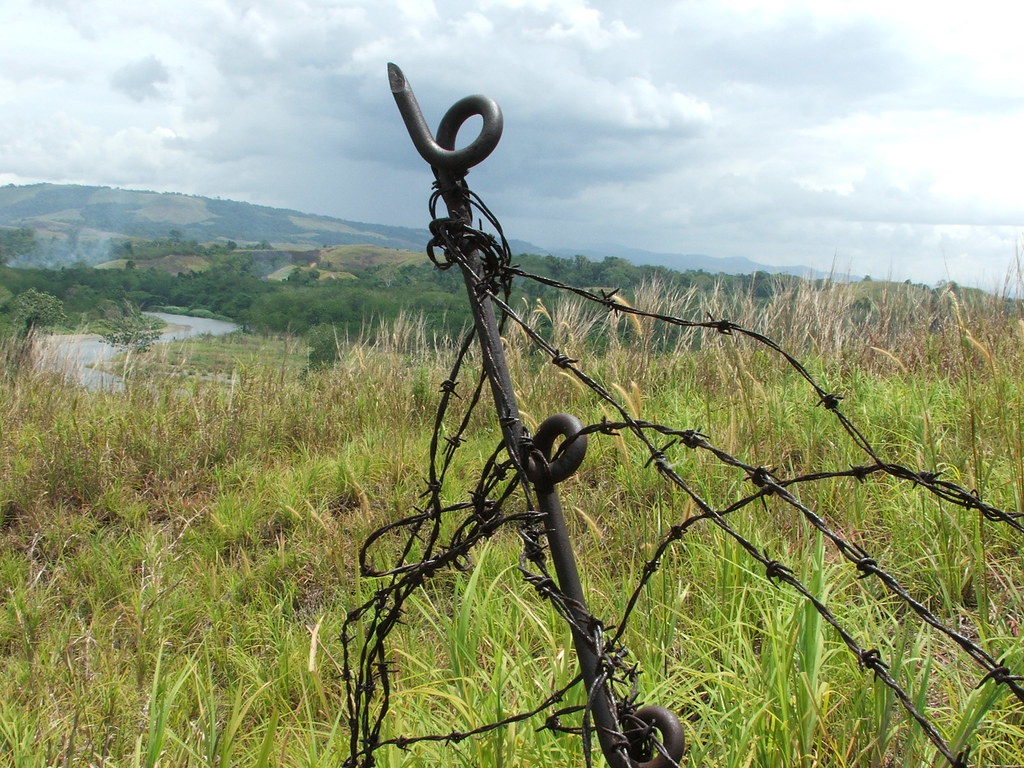
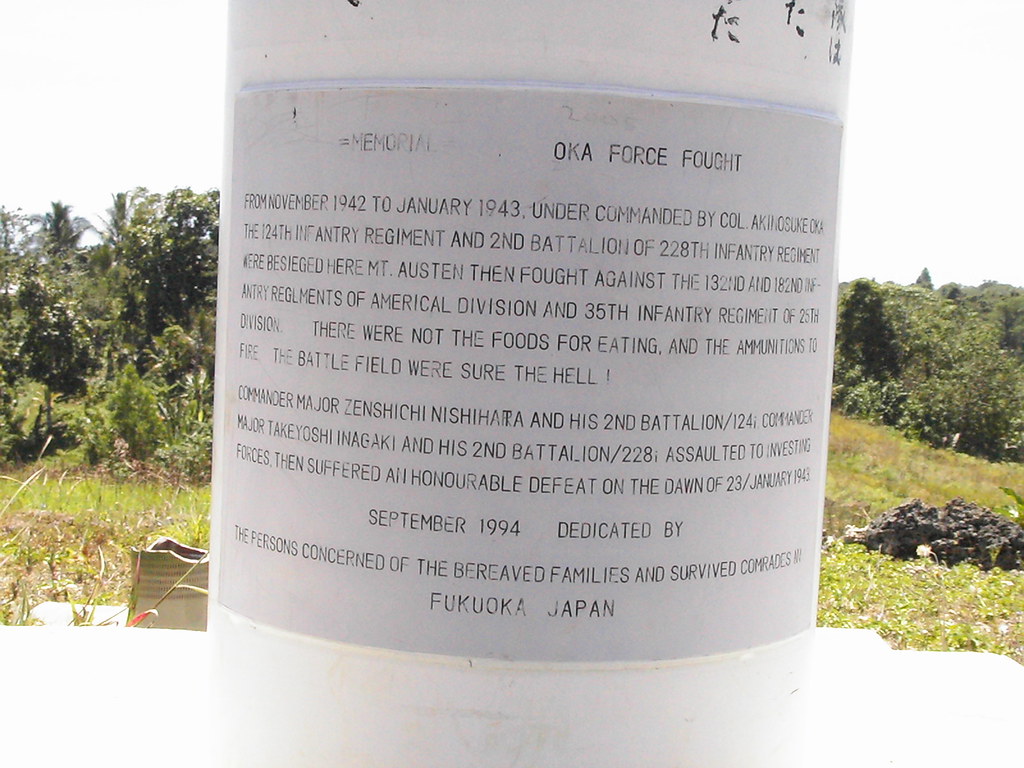
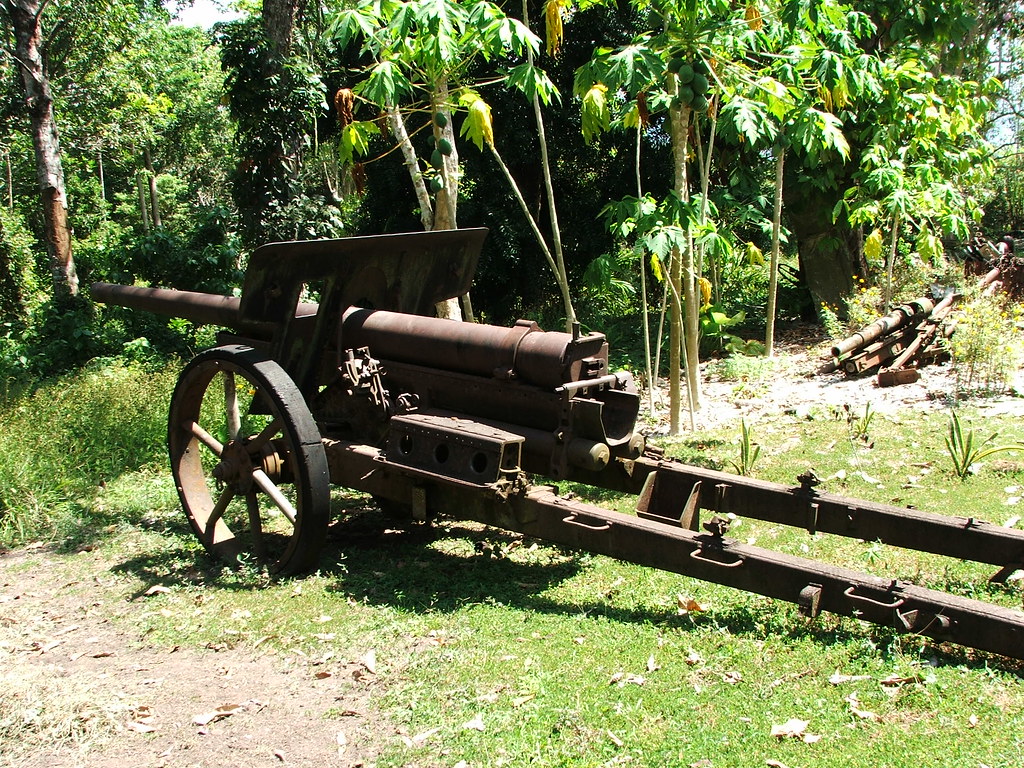
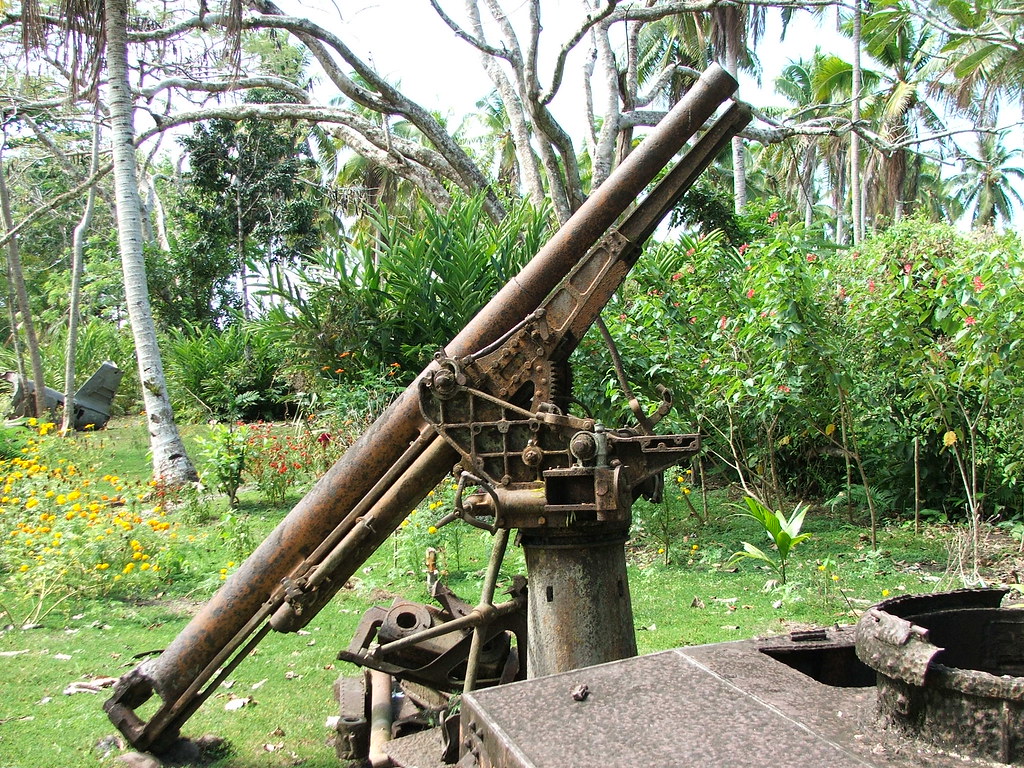
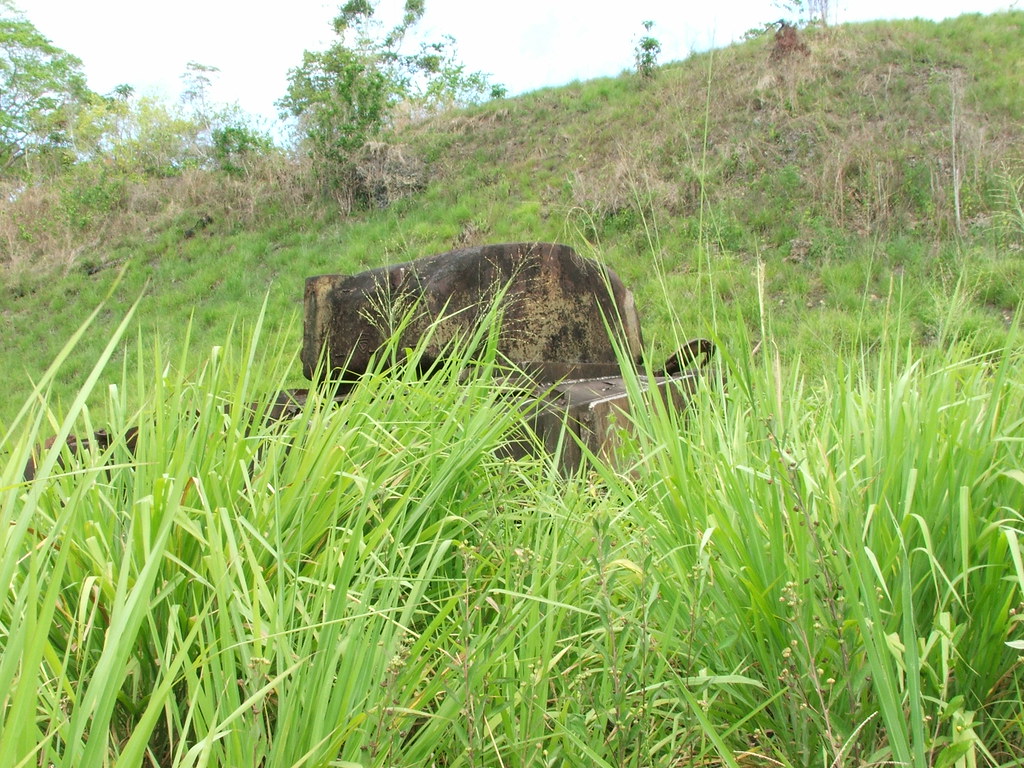
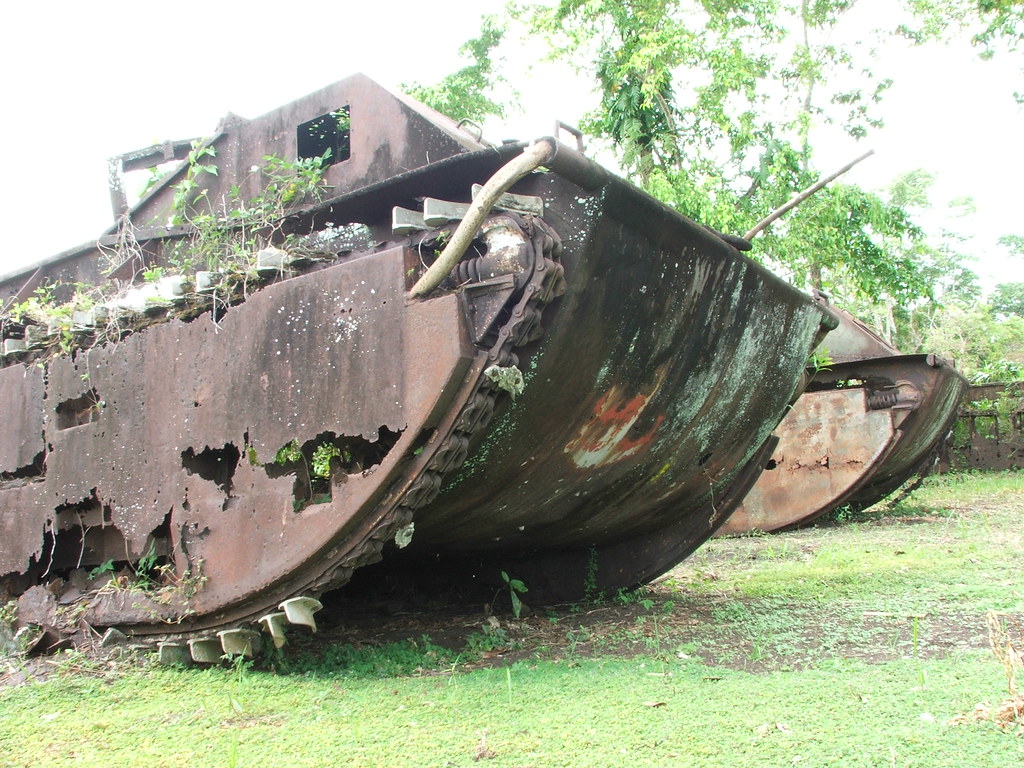
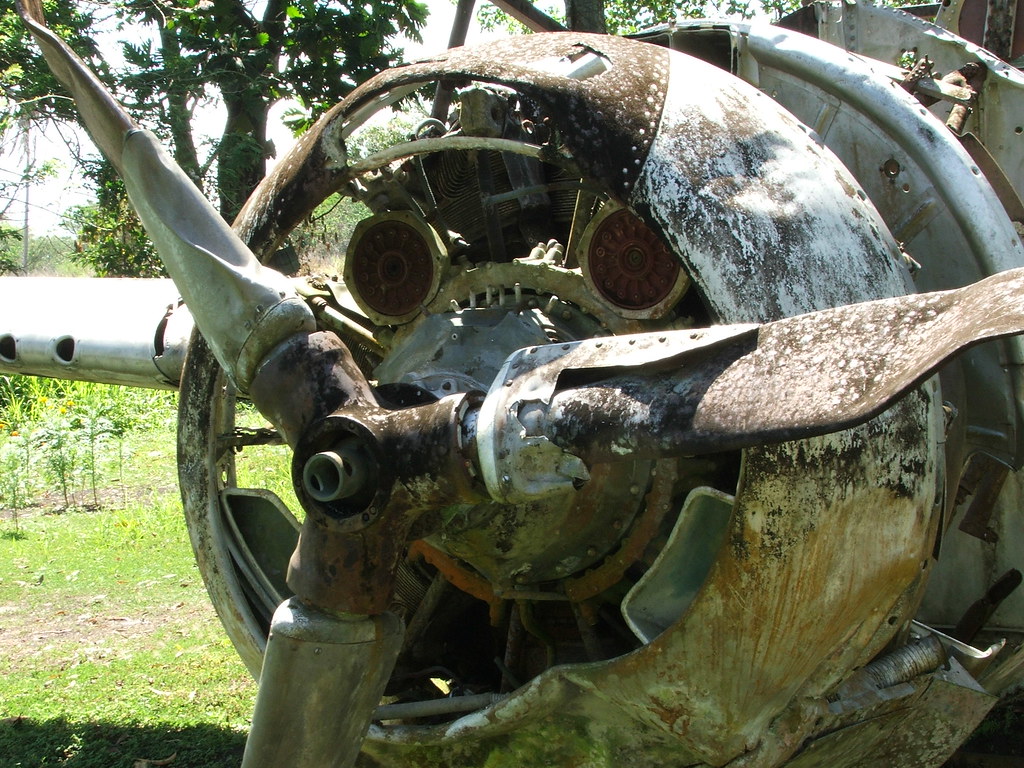
World War 2 Relics-Solomon Islands

Some images of the remains of the Second World War on Guadalcanal, namely the Guadalcanal Campaign. More on this to come...


Photos courtesy of Phil Blade, Honiara,2006

Sunday, February 26, 2006

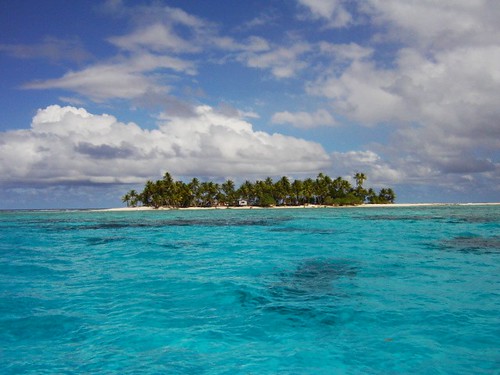
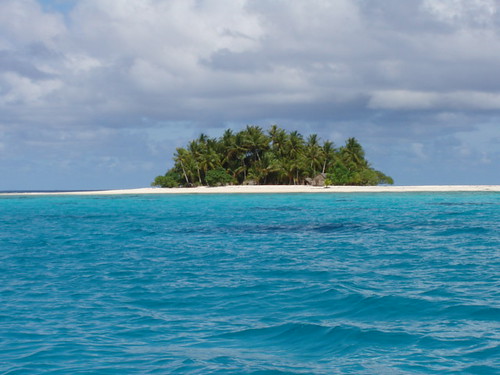
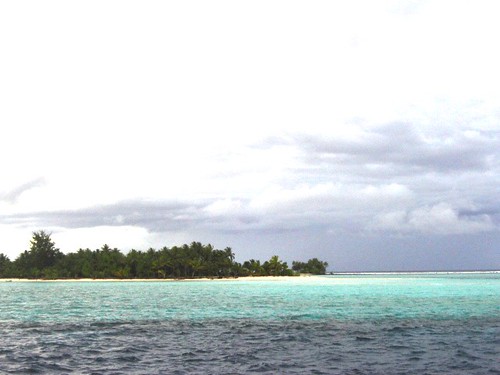
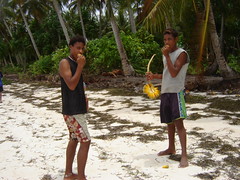
"Ontong Java" - The Lord Howe Island: Solomons hidden Paradise

Ontong Java also known as Lord Howe Atoll, is a 50km attractive boot-shaped atoll made up of 122 islands lying just south of the equator and 258km north of Santa Isabel. Approximately 57km long and 50km wide with a total population of 3000+ Polynesian inhabitants, Ontong Java is the largest lagoon in the Solomon Sea, and is the country's northernmost point.
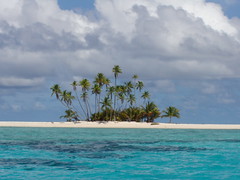
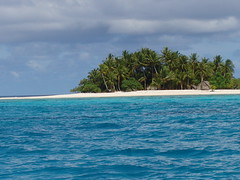
The total land area is only a minute 12 sq km with the widest stretch of dry ground on the islands of Luaniua (population 1300) and Pelau (400 people) measuring only one km, while the average breadth of many of its islands is only a third of this. No island is higher than 13m above sea level with most islands barely one to three meters high and composed mostly of coral debris.

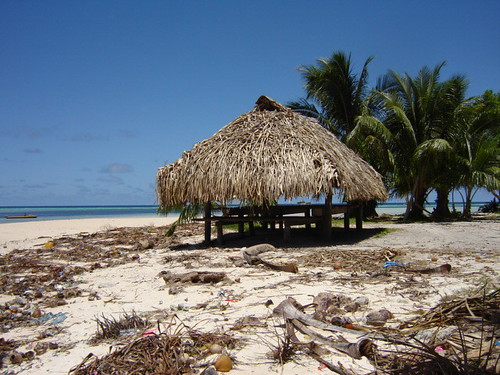
Apart from the two main villages of Luaniua and Pelau, few other islands have temporary shelters where a small number of about 50 people now live almost permanently, and where there are fine beaches, good coral and plenty of fish throughout the lagoon. The two populated islands consist of freshwater swamps where natural depressions have been artificially deepened for mulching pits to cultivate taro crops, a staple diet on the atoll.
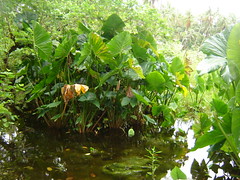
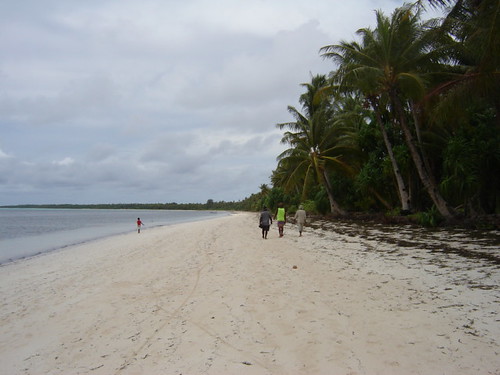
Coastal areas consist of narrow strips of coconut palms and scrub, mainly on the ocean side. Annual consumption of coconuts by the atoll's inhabitants is estimated to be around 600000 nuts annually which averages about one coconut per person per day.
Besides collecting beche-de-mer and trochus shells for the Hong Kong market, the people of Ontong Java often exchange with copra for goods at the only two small stores on Luaniua and Pelau. Houses are built flush to the ground with a network of poles forming the frame with the roof thatched with pandanus leaves.
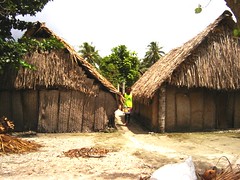
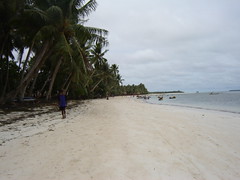
Pottery dating back 2000 years has been discovered on the atoll and studies into the atolls language suggest it is related to both the Samoan and Tongan tongues. Believed to have separated from its mother tongue, their language passed in about 300 AD through Tokelau or Tuvalu before reaching the atoll from there.

In 1616 Dutch adventurers Le Marie and Schouten may have sighted Pelau and its adjacent islets. But it was Abel Tasman who in March 1643 first sighted the atoll, and believing his sighting was the precursor of good fortune called the group Ontong Java.
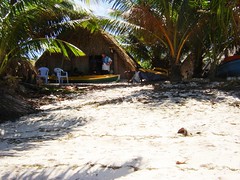

Later in 1791, John Hunter became the first European to set foot on the atoll's soil and renamed it Lord Howe Atoll. Whalers and traders later followed and in the 1870s black birders in search of slaves began visiting the group.

IN 1893 Germany annexed the atoll but later ceded it to Britain in 1899.
Sea birds are prolific on Ontong Java, and some islanders keep frigate birds as free-flying pets. The black-naped tern is plentiful and is believed to breed only on this atoll. This medium-sized nearly all-white sea bird has a black line running from its eyes to the nape of its neck.

Megapode birds are plentiful and lay their eggs in self-built mulch mounds. Because of the people's traditional association with the megapode bird, they have flourished as the birds and their eggs are not eaten.
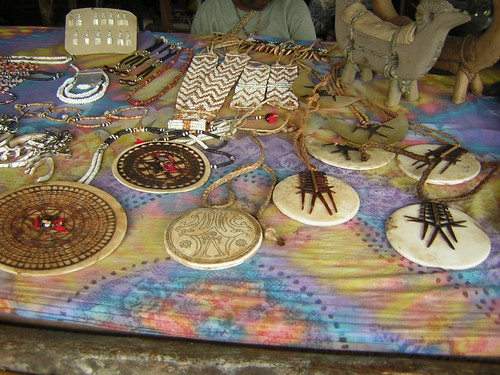
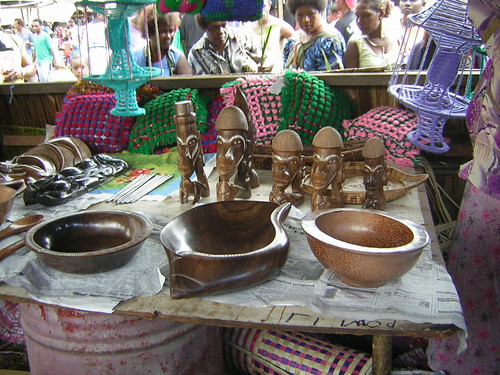
Ontong Java art consist of gaunt geometrically shaped female deity figures, which were a distinctive feature of the atoll's statue art. The lower part of the face was portrayed as an inverted triangle with straight lines to represent the eyebrows and nose. Some of these still exist. Graveposts are made from wood and coral rock and stylised with human faces.

Pearl shells are shaped to make fish-hooks, necklaces and nasal pendants and women use back-loom for weaving. Loincloths made on a loom are then dyed with tumeric.
In society and conduct, the Ontong Java people observe traditional customs in relation to marriage and property. The male line owns the coconut groves and does the fishing, while the female side maintains the taro plots and is prominent domestically.

Many men and women in Ontong Java are tattooed with the forehead decorated with marine or geometrical designs in childhood, which are later extended to other parts of the body. Some tattoo designs are in the shape of a hook used for catching oil fish which is local delicacy.
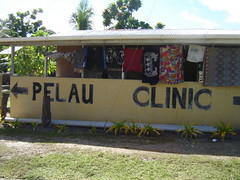
Both Luaniua and Pelua have medical clinics. Guest accommodation has only recently been built at Luaniua, but if one wishes to visit Pelau or any of the other islands, the village chief should firstly be contacted. If agreed, accommodation will be arranged in the village. Fish, shellfish, lobsters and other staples are plentiful but sufficient quantities of other diet requirements should be taken from Honiara. It is common courtesy to ask someone to show you around and will ensure acceptance of one's presence.

Yachts and ships can use one of the 23 passages through the reef to enter the atoll. To the south is Ke Avaiko Passage leading to the main anchorage at Luaniua.

Photos and Story by Rex Tara, 2006.

Tuesday, February 21, 2006

The Lord Howe Island: Solomons hidden Paradise

These are truly some remarkable photos of Lord Howe Islands in the Solomon Islands Archipelago. These islands known as the Malaita Outer Islands are in the Malaita Province and are home to people with Polynesian origin. It can be rightfully said the hidden paradise of Solomon Islands. More stories to come...(Click Photos to enlarge)


Photos courtesy of Rex Tara, Feb.2006

Tuesday, November 29, 2005

SOLOMON ISLANDS INTER-TERTIARY 2005

The Solomon Islands Inter-tertiary games kicks of yesterday at the Telekom Training School, with a good number of overseas students participating. The games played are soccer, vollyball, basketball and other games. It is hosted by the USP Laucala Campus and will end on Wednesday this week. I will bring you results of the games later. Also, there was a thanksgiving service held at the St Barnabas Cathedral yesterday evening for all the students studying in various institution in the region.

Monday, November 07, 2005

A Primitive Civilisation: Solomons Back in Time

These are some old photos that I have come across while surfing the net. It really brings one back in time to those times when our ancestors have their own civilisations and their own style of governing, and their own scientific knowledge, which have still being called primitive in the modern times. Personally I do feel that our ancestors have the right to claim that our traditional sciences,knowledge and governance at that time earned the credit to a part of civilisation even the modern elites and knowledge have still to come to terms with...so here are some of the glimpses of our past as we travel through time back to the Solomon Islands:


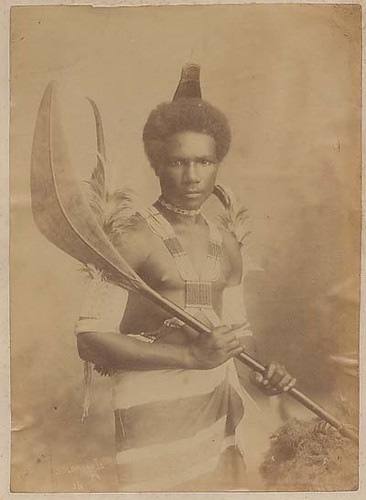
Warrior with wicker shield and parrying club, Solomon Islands.
Original albumen photograph, c 1880's (mounted on album page with photograph of the Suez Canal by Zangaki verso) Photographer: Dufty, Levuka (blind stamped lower right) The man holds a wicker shield, lava lava (New Georgia, Florida, Santa Isabel or Guadalcanal); with his right hand he holds a club or parrying shield, qauata (San Cristobal or Santa Ana).


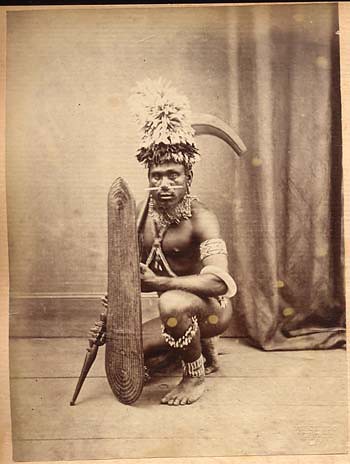
Young warrior with parrying club, Solomon Islands
Original albumen photograph, c 1880's (on original folio size board mount)
Photographer: Thomas Andrew
The young man holds a club or parrying shield, qauata (San Cristobal or Santa Ana); note also the feathered arm ornaments, beaded body decoration and comb standing upright at the crown of the head.


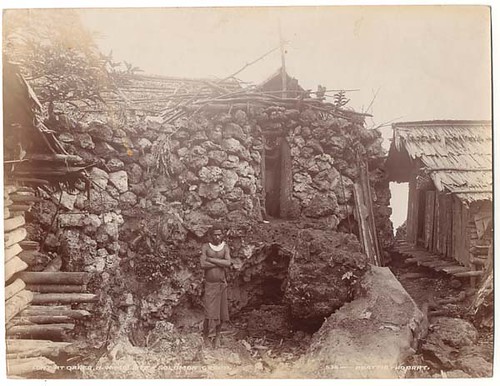
Fort at Qarep, northwest Malaita, Solomon Islands.
Original albumen photograph, c 1900 (unmounted)
Photographer: J.W. Beattie, Hobart (titled in the negative and numbered 535)
The native man in the centre wears a Malaita pearl shell ornament, dafi


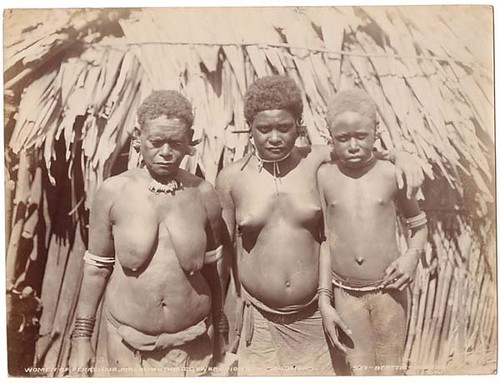
Women of Ferasibor, Malaita, Solomon islands.
Original albumen photograph, c 1900 (unmounted)
Photographer: J.W. Beattie, Hobart (titled in the negative and numbered 529)
Three generations of women.


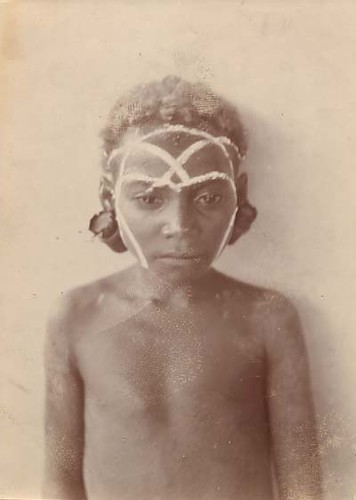
Vella Lavella girl with painted face and shell ear ornaments, Solomon islands.
Original albumen photograph, c 1900 (unmounted)
Photographer: J.W. Beattie, Hobart (titled in pencil, verso)


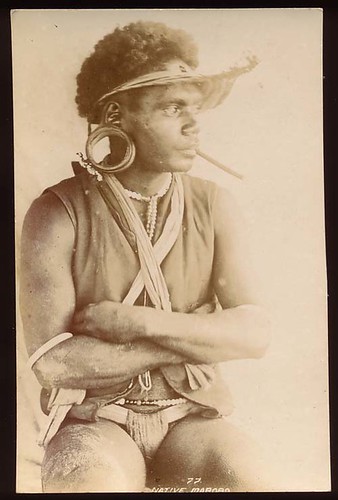
Solomon Islands native, Marobo
Real photo postcard, c 1920 (postally unused)
Printed by Kodak, Australia
Photographer unknown


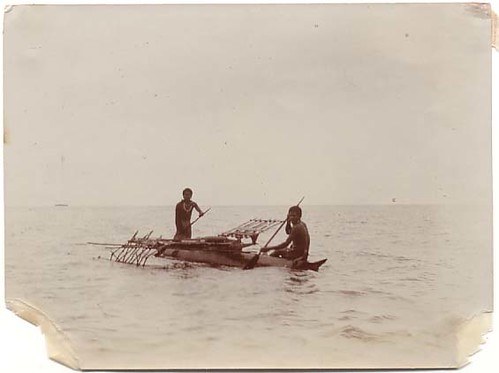
Vanikolo (Vanikoro) natives in canoe, Santa Cruz group, Solomon Islands.
Original photograph, c 1900-1910
Photographer unknown
Inscribed in pencil verso: Last cruise of Flora. Several canoes stuck to us till we were out of sight of land. Vanikolo natives Santa Cruz.
Loss due to careless removal from album.

Solomon Islands Arts and Crafts

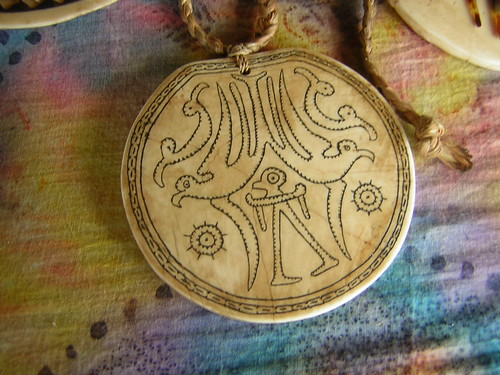
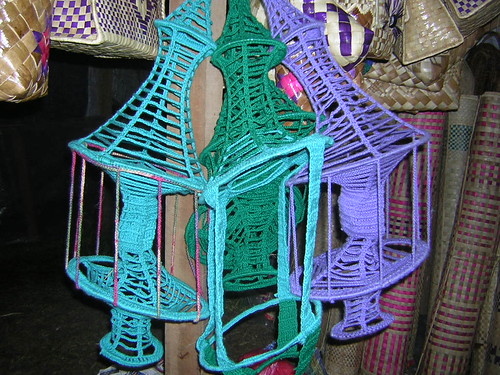
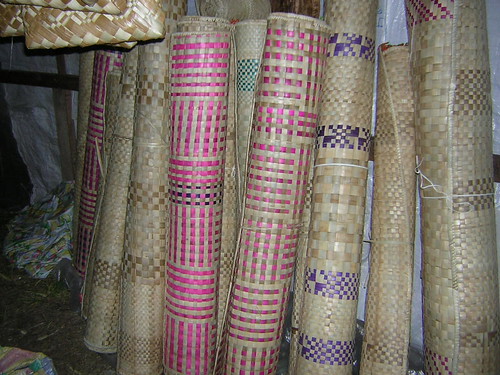
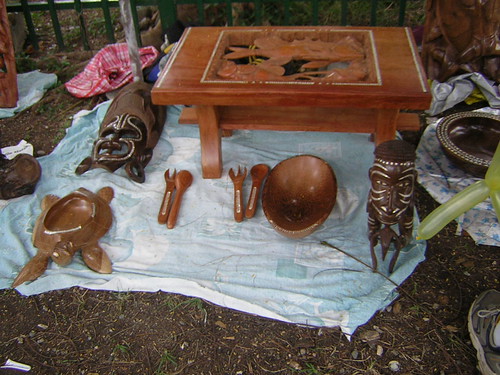
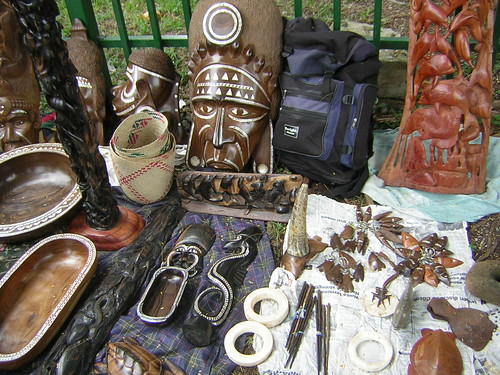
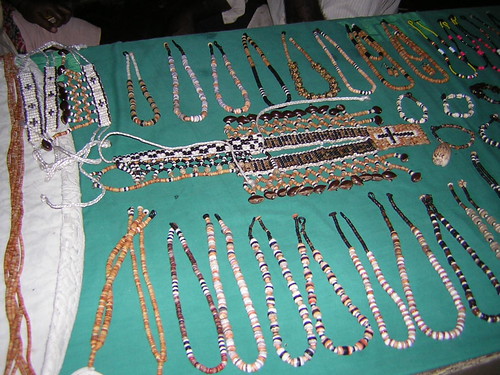
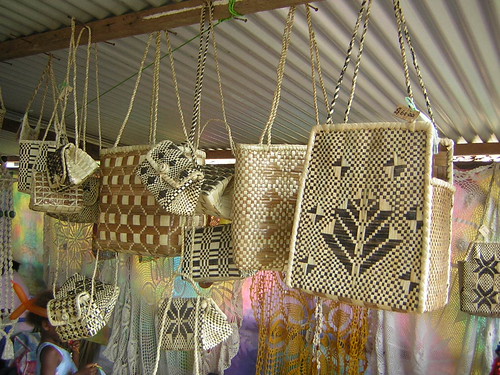
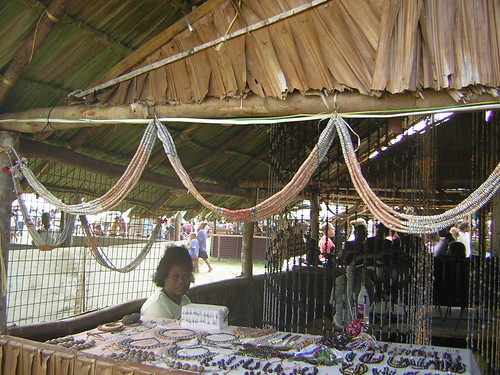
These are some of our Art and Crafts taken during the 2005 National Trade And Cultural Show, at Honiara, Solomon Islands...There were are whole ranges of different traditional carvings, strings of shell money, necklaces, ladies hand bag, woven mats and tapa drawings...Here are some pictures of Solomon Islands crafts. Click on Image to Enlarge:


Friday, November 04, 2005

International Underwater Photo Contest

November 03, 2005 – 09:07
International Underwater Photo Contest
The contest includes a category for images that focus on conservation and the marine environment, and one specifically for entries taken by compact digital cameras.

2006 - 1st Annual Wetpixel.com and DivePhotoGuide.com International Photo Competition

Wetpixel.com and DivePhotoGuide.com have teamed up to celebrate the beauty and delicacy of the marine environment by developing the first instance of a new, annual, international underwater photography competition.

Photographers will compete in six categories to win more than $25,000 in prizes, including premium dive travel, underwater photography equipment, and more! Dive packages in the prize list include trips to some of the top photo destinations in the world: the Solomon Islands, LembehStrait, Raja Ampat, Komodo, the Galapagos Islands, Papua New Guinea, The Bahamas and Palau! Other prizes include camera housings, strobes, lighting systems, and other valuable items (see website for complete prize list).

The contest includes a category for images that focus on conservation and the marine environment, and one specifically for entries taken by compact digital cameras.

All entrants will receive one free, digital issue of Dive Chronicles Magazine, and all entrants in the Compact Camera category will receive one free photo lesson from renowned underwater photographer, Marty Snyderman, via TheUnderwaterphotographer.com.

Winners will be announced on stage at the 2006 Our World-Underwater festival in Chicago, Illinois (February 24-26, 2006).

15% of entry proceeds will be donated to marine conservation efforts.

By Stephan Whelan
http://www.deeperblue.net/newsfull.php/1190

Tuesday, November 01, 2005

NEW SILSA EXECUTIVE

Sunday October 30, 2005: The Solomon Islands Law Students Association (SILSA) at the University of the South Pacific School of Law, Emalus Campus, based in Port Vila, Vanuatu has a new Executive. The election the new Executive took place this morning after a final combined Sunday service organised by the out-going Chris Rarumae led-Executive. The new Executive will look after the affairs of the Association through to the end of 2006. Meanwhile, examinations for law students at Emalus Campus commence tomorrow, Monday 31st October and end on Friday 11th November 2005.

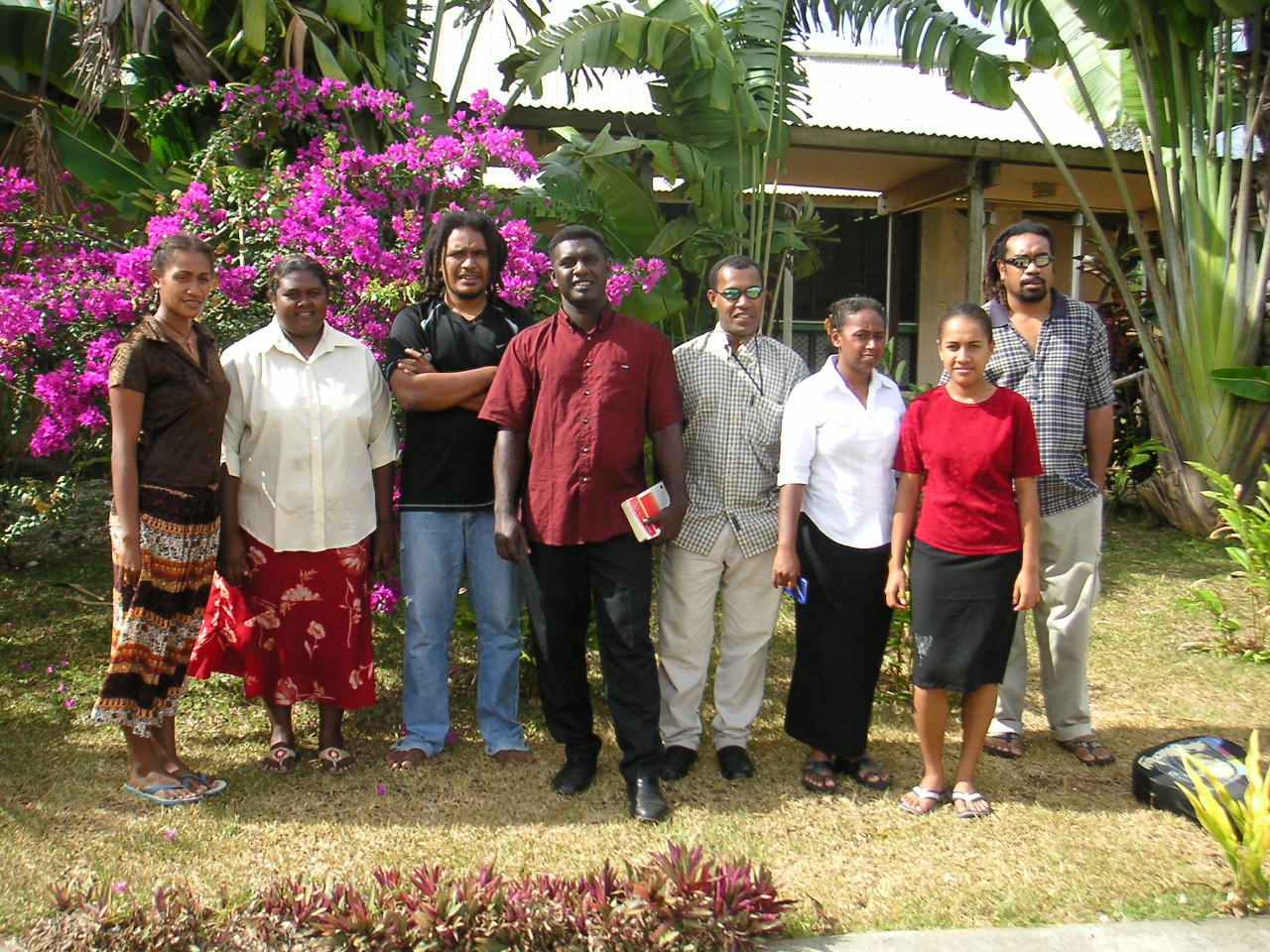
Standing from left to right in the photo below are: Miriam (Chairperson - Finance), Myonnie Samani (Secretary), Albert Kabui (Chairman - Academic), James Junior Kaboke (Sports/Cultural), Philip Fiuka (Treasurer), Florence Joel (Vice-President), Nellie Leafasia (Chair person - Religious Committee) and Andy Kesaka (President).

(Photo courtesy of Sita).